Bio & Health Tech
Where computation meets biology, medicine, and the human body.
4 career guides in this field
Market Context
Where the Field Stands in 2026
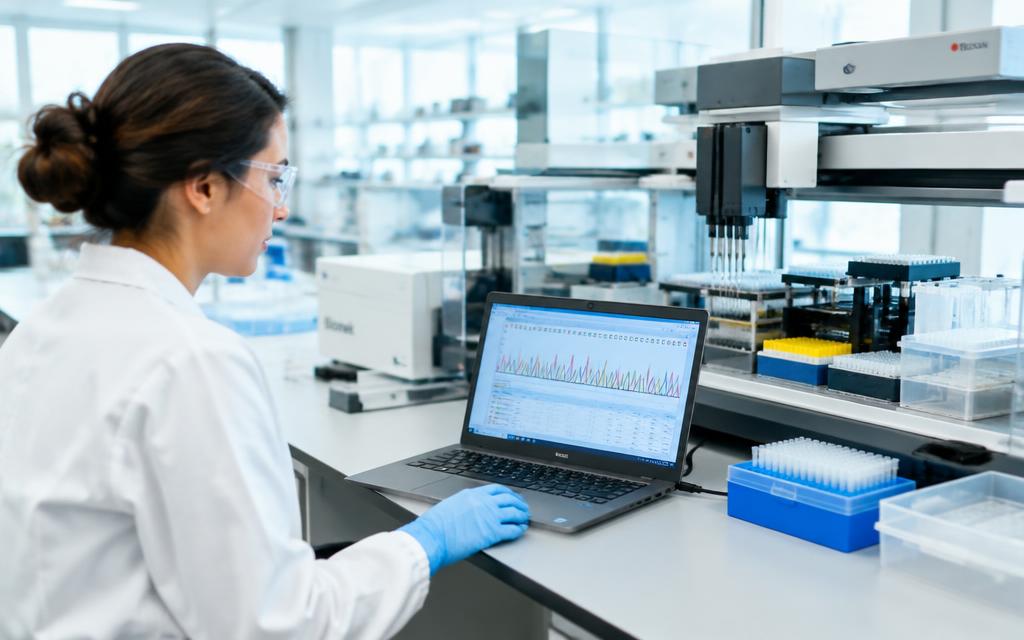
Biology has become a data-intensive discipline. Sequencing costs keep falling, lab automation enables thousands of experiments per week, and AI protein-structure tools recognized by the 2024 Nobel Prize in Chemistry are now routine in drug discovery. That creates demand for engineers who can build reliable pipelines, lab software, and regulated medical devices.
Wearables and connected medical devices are growing quickly, but they operate under strict regulation such as FDA software guidance and the EU Medical Device Regulation. Engineers who understand documentation, validation, and data privacy are scarce and well-rewarded.
Demand Drivers
- AI-driven drug discovery and protein design moving into industrial pipelines.
- Automated 'cloud labs' and biofoundries that need workflow and robotics software.
- Remote patient monitoring and consumer health wearables.
Honest Risks
- Regulatory approval cycles are long; product timelines can slip by years.
- Many roles prefer domain education in biology or biomedical engineering alongside software skills.
Sources
Career Guides
Roles Inside Bio & Health
 Bio & Health
Bioinformatics Software Engineer
A Bioinformatics Software Engineer develops specialized computational algorithms, data pipelines, and software tools to analyze massive biological datasets, including genomic DNA sequencing arrays,…
Key Skills
 Bio & Health
Wearable Health Tech Firmware Engineer
A Wearable Health Tech Firmware Engineer designs and programs the low-level embedded software, sensor drivers, and power management algorithms for wearable medical devices, smartwatches, continuous…
Key Skills
 Bio & Health
Bio-Hybrid Robotics Software Engineer
A Bio-Hybrid Robotics Software Engineer develops micro-controller firmware, computer vision tracking software, and closed-loop stimulation control systems for bio-hybrid robots that integrate livin…
Key Skills
 Bio & Health
Synthetic Biology Automated Foundry Software Engineer
A Synthetic Biology Automated Foundry Software Engineer develops laboratory automation software, robotic liquid-handling integration scripts, and high-throughput data management pipelines for autom…
Key Skills